



Researchers from Tokyo Metropolitan University have discovered that a specific chemical feature of a key protein known as tau may cause it to accumulate in the brain and trigger illnesses like Alzheimer’s. They found that disulfide bonds on certain amino acids act to stabilize tau and cause it to accumulate, an effect that got worse […]
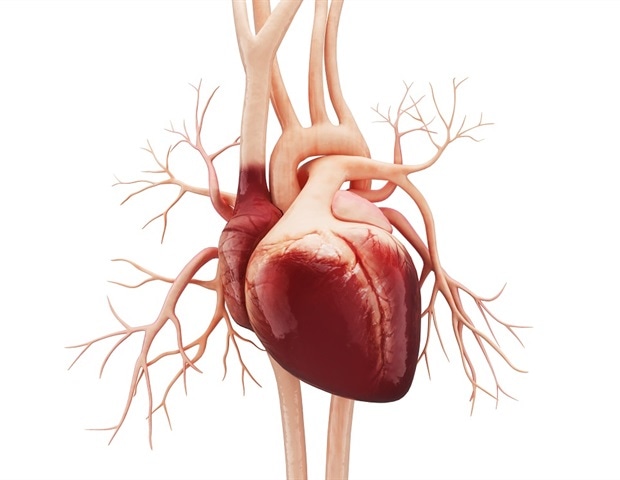
Study reveals networks of genes involved in congenital heart disease
Over two million babies, children, and adults in the United States are living with congenital heart disease—a range of birth defects affecting the heart’s structure or function. Now, researchers at Gladstone Institutes and UC San Francisco (UCSF) have made inroads into understanding how a broad network of genes and proteins go awry in a subset […]
tRNA fragments are involved in poststroke immune reactions
Sebastian Lobentanzer of Goethe University, Frankfurt, has been studying small RNA dynamics in various contexts using bioinformatic methods. Recently, small RNAs have become more and more interesting for researchers, primarily because of their extensive regulatory functions. To examine these functions in stroke, Lobentanzer joined Katarzyna Winek of Hebrew University, Jerusalem, to study microRNAs and tRNA […]
What is Decembeard and how can you get involved?
Completed Movember? Before you pick up your razor to finally shave off that ’tache, allow us to introduce the next no-shave fundraising challenge: Decembeard. The concept is simple: you ditch your razor and let your beard grow fully throughout December. It’s all to raise money for Bowel Cancer UK, a charity that’s facing a 40% […]
Researchers find a protein involved in Huntington’s disease motor deficits
Huntington’s disease is caused by a mutation in the Huntingtin gen. Patients show involuntary movements, cognitive deficits and specific psychiatric disorders resulting from the degeneration and death of medium spiny striatal neurons. A study led by researchers of the Institute of Neurosciences of the UB (UBNeuro) describes the toxic role of the protein RTP801 in […]
Dual role discovered for molecule involved in autoimmune eye disease
The inflammatory molecule interleukin-17A (IL-17A) triggers immune cells that in turn reduce IL-17A’s pro-inflammatory activity, according to a study by National Eye Institute (NEI) researchers. In models of autoimmune diseases of the eye and brain, blocking IL-17A increased the presence of other inflammatory molecules produced by Th17 cells, immune cells that produce IL-17A and are […]